

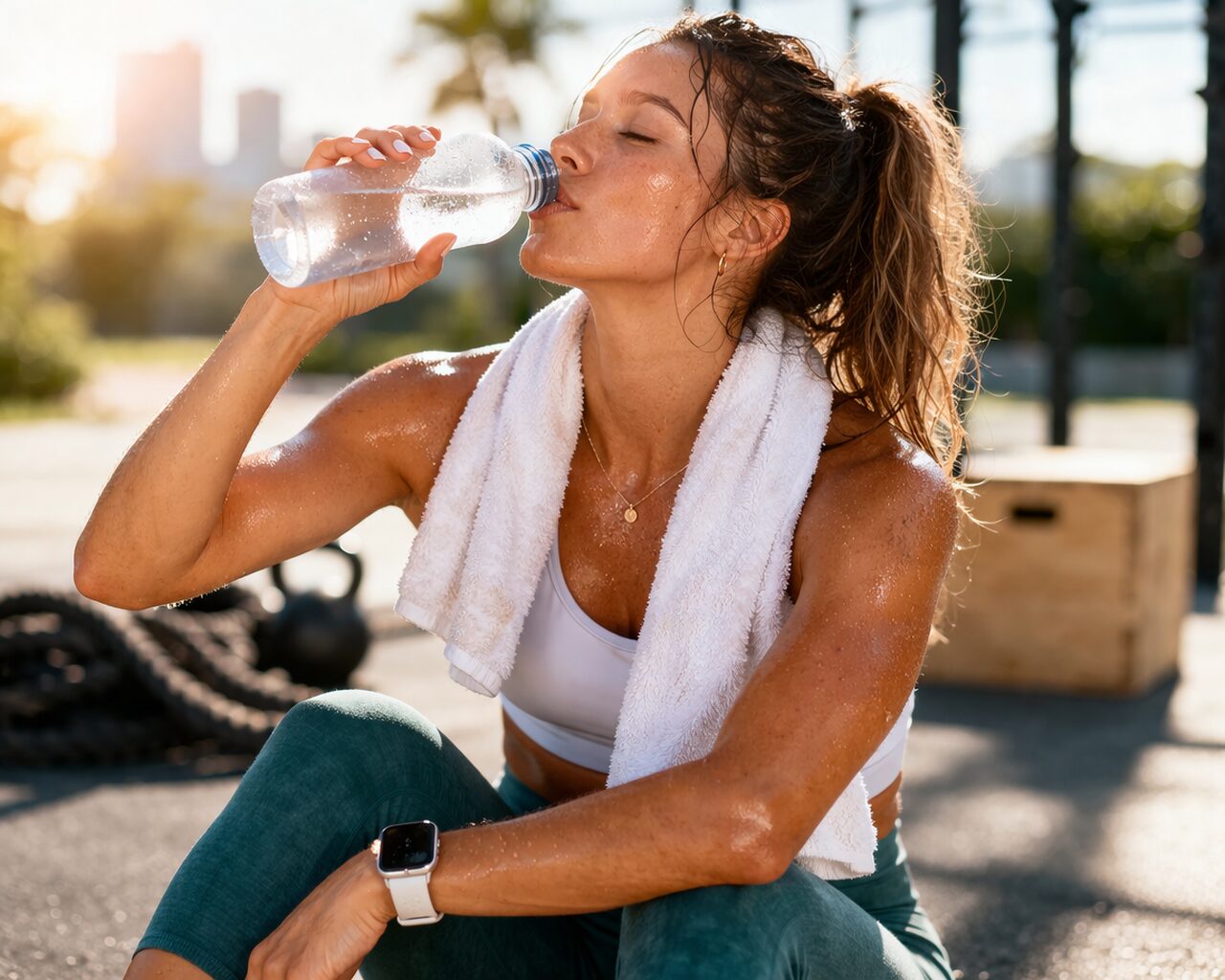
Houston’s Heat Is Coming: How to Fuel, Hydrate, and Recover for Summer Training
The Houston Heat Factor
If you have lived in Houston for more than a year, you know the drill. By mid-May, the temperature is already flirting with 90 degrees, the humidity makes every outdoor run feel like swimming through warm soup, and the air conditioning inside Fit Elevation starts feeling like the most valuable thing in your life.
But heat does not just affect your outdoor training. It affects your recovery, your appetite, your sleep quality, and even your gym performance. Understanding how your body responds to Houston’s unique climate is one of the most underrated fitness advantages you can develop. This blog is your complete guide to fueling, hydrating, and recovering like a Houston athlete all summer long.
What the Heat Actually Does to Your Body
When you exercise in hot or humid conditions, your body has to work harder to regulate its core temperature. More blood is diverted to the skin to facilitate cooling through sweat, which means slightly less blood is available to power your working muscles. Your heart rate climbs higher at the same effort level, and your perceived exertion increases even if your actual output stays the same.
This is not a sign of weakness. It is physiology. The good news is your body adapts to heat over time through a process called heat acclimatization, and you can support that process dramatically through smart nutrition and hydration.
Pre-Workout Nutrition: Setting the Stage
What you eat before training directly influences how you feel and perform during your session. In warm weather, digestion slows slightly, which means heavy pre-workout meals can sit uncomfortably and divert blood flow away from muscles toward your gut. Here is how to optimize:
Timing
Eat a substantial meal two to three hours before training. If you are training within 60 to 90 minutes of eating, keep it light. A banana with almond butter, a small bowl of oatmeal with berries, or a Greek yogurt with honey are all excellent quick pre-workout options.
Composition
Your pre-workout meal should prioritize easily digestible carbohydrates for quick energy, a moderate amount of protein, and minimal fat and fiber, which slow digestion. Think rice and grilled chicken, oatmeal with a protein scoop, or a simple smoothie with fruit, spinach, and protein powder.
Caffeine
Pre-workout caffeine is effective for performance, but it is also mildly diuretic. If you use a pre-workout supplement or coffee before training, add an extra eight ounces of water to your pre-training hydration routine. In Houston’s heat, this small adjustment matters.
The Hydration Framework Every Houston Athlete Needs
Standard hydration recommendations were not designed with Houston in mind. When the humidity climbs above 80 percent, your body is sweating even when sitting still. By the time you are training, the stakes are significantly higher.
Daily Baseline
Aim for at least half your body weight in ounces of water daily as your baseline. A 180-pound person should be consuming a minimum of 90 ounces. During May through September in Houston, consider this the floor, not the ceiling.
Pre-Workout Hydration
Begin hydrating two hours before your session. Drink 16 to 20 ounces of water in the two hours before training, then another 8 ounces about 20 minutes before you start. Do not wait until you feel thirsty because by then, you are already mildly dehydrated.
During Training
Sip 6 to 8 ounces of water every 15 to 20 minutes during your workout. If your session exceeds 60 minutes or if you are sweating heavily, consider a sports drink with electrolytes for that second half. Sodium, potassium, and magnesium are the primary electrolytes lost in sweat, and replacing them maintains muscle function and prevents cramping.
Post-Workout Rehydration
Weigh yourself before and after a long or intense training session. For every pound you have lost, drink 16 to 24 ounces of water to restore fluid balance. This is especially relevant for outdoor training or any session where you are visibly sweating heavily.
Electrolytes: Why They Matter More in Houston
Sweat is not just water. It contains significant quantities of sodium, potassium, magnesium, and chloride. When you sweat heavily in Houston’s heat, you are losing these electrolytes at an accelerated rate. Replacing just water without electrolytes can actually dilute your blood sodium levels, a condition called hyponatremia that causes fatigue, cramping, and in severe cases, serious health issues.
Practical electrolyte sources include:
- Coconut water: Natural source of potassium and some sodium
- Electrolyte tablets: Brands like Liquid IV, LMNT, or Nuun dissolve in water and replace multiple electrolytes efficiently
- Pickle juice: An old athlete’s trick for rapid cramp relief, surprisingly effective due to its sodium content
- Salted meals post-workout: Do not fear salt after training. Your body needs it
- Bananas, avocados, and leafy greens for potassium and magnesium
Post-Workout Recovery Nutrition
The 30-to-60-minute window after your workout is often called the anabolic window, and while the science on its exact importance has evolved, the fundamental principle holds: consuming protein and carbohydrates after training accelerates muscle repair and glycogen replenishment.
Protein
Aim for 25 to 40 grams of high-quality protein in your post-workout meal or shake. Whey protein is fast-digesting and excellent for this window, but chicken, eggs, or Greek yogurt work just as well if you have time for a full meal.
Carbohydrates
Restore your glycogen stores with 30 to 60 grams of carbohydrates post-workout. White rice, a banana, a potato, or even chocolate milk are all solid choices. Yes, chocolate milk. Multiple studies have shown it to be an effective post-workout recovery drink due to its carbohydrate-to-protein ratio.
Anti-Inflammatory Foods
Houston summers place added oxidative stress on the body. Incorporating anti-inflammatory foods regularly, blueberries, turmeric, salmon, walnuts, and dark leafy greens, supports faster recovery and reduces muscle soreness.
Sleep and Recovery in the Houston Summer
Houston heat affects sleep quality, especially if your home is not well air-conditioned. Poor sleep is one of the most underrated performance killers. Prioritize a cool, dark sleeping environment. Aim for seven to nine hours of sleep on training nights. Avoid intense training within two to three hours of bedtime, as elevated core temperature can disrupt sleep onset.
Consider a cool shower before bed on hot Houston nights. Research shows that rapid skin cooling signals the body to drop its core temperature, a cue that accelerates sleep onset.
Train Smart Inside at Fit Elevation
One of the smartest decisions a Houston athlete can make is building the bulk of their heavy training inside an air-conditioned facility. The controlled environment of Fit Elevation allows you to train harder, recover better between sets, and push more intensity without the thermal stress that outdoor training adds.
Save outdoor runs, bike rides, and hiking for early morning when temperatures are more forgiving. Use Fit Elevation for your strength sessions and high-intensity work. Your performance will reflect the difference.
May is the last comfortable month before full Houston summer arrives. Make the most of it. Join us at fitelevationhtx.com.