

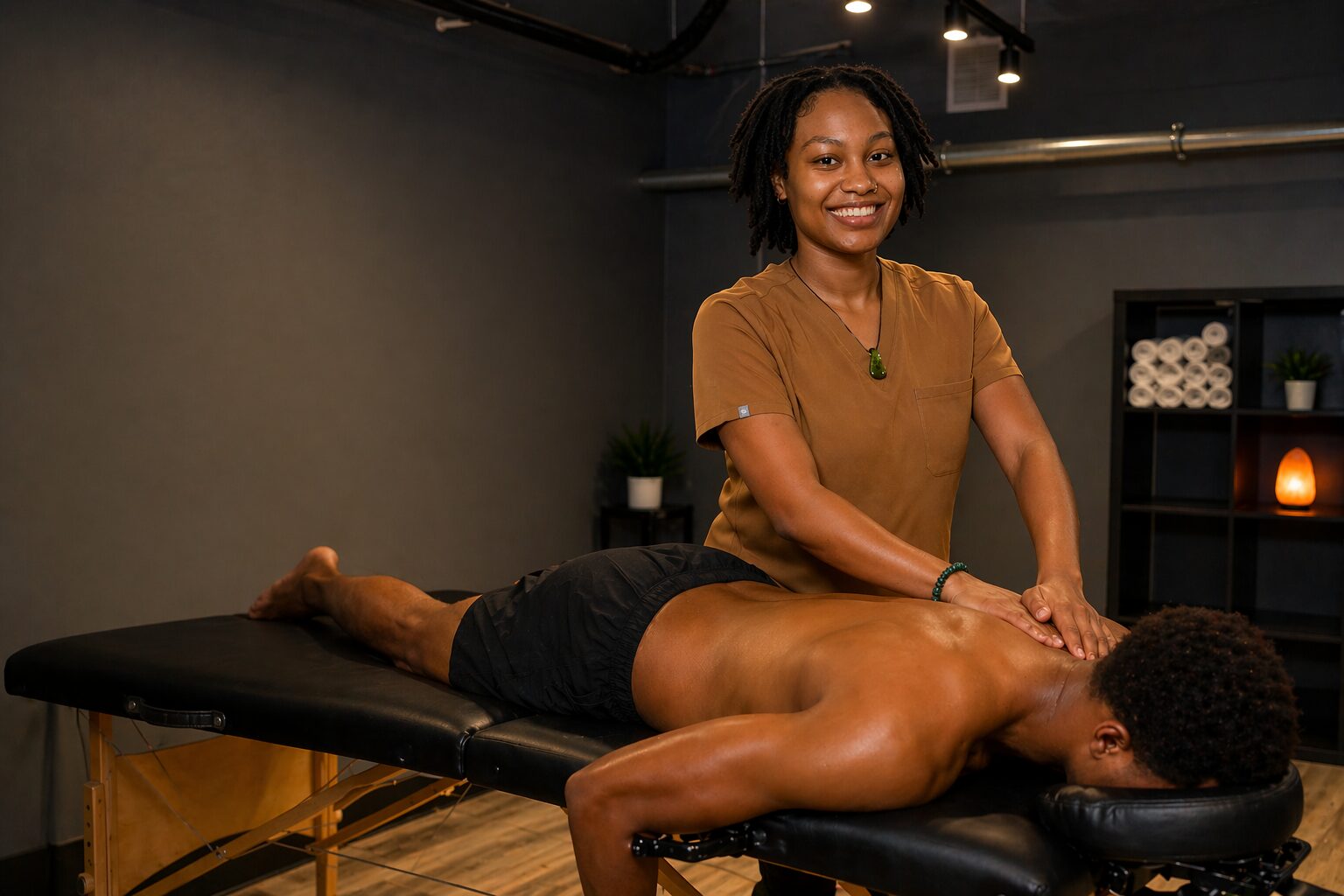
The Missing Piece in Your Fitness Routine: Why Massage Therapy Belongs in Your Training Plan
You train hard. You show up consistently. You’re eating right, sleeping enough, and pushing yourself in every session. And yet — there’s a plateau you can’t quite break through. Your muscles stay sore longer than they should. You feel tight in places that never seem to loosen up. Your energy is inconsistent. Something is off, and you can’t figure out what.
For a significant number of dedicated fitness enthusiasts, the missing variable is recovery — and more specifically, the kind of targeted, professional recovery that massage therapy provides.
At Fit Elevation, we made a deliberate decision to offer massage therapy as an integrated part of our fitness services, not as a luxury add-on. That decision was rooted in a simple observation: the members who consistently performed best and stayed healthiest were the ones who took recovery as seriously as training. Massage therapy is one of the most powerful recovery tools available, and most people are dramatically underusing it.
Here’s what you need to know.
The Physiology of Why Your Muscles Need More Than Rest
When you exercise — particularly when you do strength training, HIIT, or high-intensity group fitness — you create microscopic damage in your muscle fibers. This is intentional. The damage triggers a repair process that, given adequate recovery, results in stronger, more resilient muscle tissue. That’s the mechanism behind virtually all training adaptations.
The problem is that this repair process requires resources and optimal conditions to complete efficiently. Inflammation, while a necessary part of healing, can become excessive and counterproductive. Metabolic waste products — including lactic acid and other byproducts of intense exercise — accumulate in muscle tissue and can impair subsequent performance if not adequately cleared.
Passive rest helps. Sleep helps more. But neither passive rest nor sleep directly addresses the mechanical and circulatory dynamics within the muscle tissue itself. That’s where massage therapy comes in.
Manual pressure and manipulation of muscle tissue through massage has several distinct physiological effects:
- Increased local blood flow, which accelerates the delivery of oxygen and nutrients to recovering tissue while speeding the removal of metabolic waste.
- Reduction in muscle fiber adhesions — the sticky, tangled areas of connective tissue (often called “knots”) that form in response to repetitive stress and can limit range of motion and generate chronic pain.
- Activation of the parasympathetic nervous system, which reduces cortisol levels, decreases heart rate, and signals the body to shift into repair mode.
- Improved lymphatic drainage, which supports the immune response associated with tissue repair.
- Reduction in delayed onset muscle soreness (DOMS), the familiar post-workout soreness that peaks 24–72 hours after intense exercise.
The research supports these mechanisms. Multiple peer-reviewed studies have found that massage therapy reduces DOMS, accelerates strength recovery between training sessions, and improves perception of fatigue — all of which translate directly to better performance in your next workout.
Sports Massage vs. Relaxation Massage: What’s the Difference?
When most people hear “massage,” they think of a spa day — ambient music, dim lighting, a gentle experience designed to produce relaxation. That’s one type of massage, and it has genuine value. But sports massage is a different discipline with a different focus.
Sports massage is specifically designed to address the needs of physically active individuals. It incorporates techniques that go deeper into muscle tissue, target specific problem areas, and work with the body’s movement mechanics in mind. A sports massage therapist understands anatomy, common training-related injuries, and the relationship between different muscle groups — and applies that knowledge to identify and address the sources of dysfunction, not just the symptoms.
Where a relaxation massage might use long, flowing strokes at consistent pressure, a sports massage might include:
- Deep tissue work targeting specific layers of muscle and fascia
- Trigger point therapy to release localized knots that refer pain to other areas
- Myofascial release to address restrictions in the connective tissue network surrounding muscles
- Stretching and range-of-motion work integrated with massage to improve flexibility and joint mobility
- Cross-fiber friction on tendon and ligament attachment points to address overuse-related inflammation
The experience is more active, more targeted, and more therapeutic. It’s not always as immediately relaxing during the session — deep tissue work can be uncomfortable in the moment — but the functional improvement you feel in the following days is significant.
When to Incorporate Massage Therapy Into Your Training Schedule
One of the most common questions we hear is: “When should I get a massage relative to my training?” The answer depends on your goals and your current training load.
For active recovery between hard training days: A massage within 24–48 hours after an intense session — focusing on the primary muscles worked — can significantly accelerate recovery and reduce the soreness that might otherwise compromise your next workout. This is particularly useful if you train 4–5 days per week and your workouts are closely spaced.
For pre-event or pre-competition preparation: A lighter, stimulating massage in the 24–48 hours before a performance event can improve circulation, increase alertness, and reduce pre-performance anxiety. Avoid deep tissue work within 24 hours of a major performance, as very deep work can temporarily reduce muscle force production.
For addressing chronic tightness or injury rehabilitation: Regular sessions targeting specific problem areas — whether it’s a chronically tight left hip flexor, impingement-related shoulder tension, or lingering quad soreness — should be scheduled consistently, not sporadically. Like training itself, massage therapy produces cumulative benefits. Monthly sessions are a starting point; bi-weekly sessions are where most active people start to feel sustained improvement.
For general wellness and stress management: If you’re carrying significant life stress alongside your training load, regular massage therapy can help manage cortisol levels that, if chronically elevated, actively impair muscle recovery, sleep quality, immune function, and fat metabolism. In this sense, massage therapy isn’t just a recovery tool — it’s a performance optimization tool.
The Houston Summer Recovery Equation
Houston summers add a specific dimension to the recovery conversation. Heat is a physiological stressor. Training in or around heat — even when done in a climate-controlled environment like our gym — means your cardiovascular and thermoregulatory systems are working harder than they would in cooler months. Your body is simultaneously dealing with the demands of training and the demands of heat management.
This increased baseline stress load means that recovery becomes even more important in summer than in other seasons. Accumulated fatigue compounds faster. The risk of overuse injury rises. Sleep quality, already compromised by heat, affects tissue repair. And the temptation to push through fatigue — because “I didn’t do as much as I wanted to today” — can lead to the kind of breakdown that sidelines people for weeks.
Building regular massage therapy into your June, July, and August schedule isn’t indulgent. In the context of Houston summer training, it’s strategic.
The Mental Health Dimension
Physical recovery is the most obvious benefit of massage therapy for athletes, but the mental health dimension is equally important and often underacknowledged.
Training — especially when combined with work stress, family demands, and the general noise of modern life — creates a cumulative psychological load. The body holds this stress in the same tissues that hold physical training stress. Chronically elevated tension in the shoulders, jaw, neck, and hips isn’t just a physical problem; it’s the body’s way of storing unexpressed stress.
The parasympathetic activation that occurs during quality massage therapy has measurable effects on mental state. Cortisol drops. Serotonin and dopamine levels increase. Anxiety decreases. People report that a regular massage schedule helps them sleep better, feel more emotionally resilient, and manage daily stressors with greater ease.
For athletes and fitness enthusiasts, this matters because mental fatigue is just as real as physical fatigue — and just as capable of derailing your training consistency. When you feel good mentally, you show up. When you’re depleted, you don’t. Massage therapy, as part of a holistic recovery plan, is one of the most effective ways to stay mentally fresh enough to maintain consistency in your training.
What a Massage Session at Fit Elevation Looks Like
Our massage therapy services at Fit Elevation are designed to integrate seamlessly with your fitness program. When you book a session, your therapist will begin with a brief intake conversation to understand your current training load, any specific areas of concern, and your goals for the session.
From there, the session is tailored to your needs — whether that means a full-body recovery massage after an intense training week, targeted deep tissue work on a specific problem area, or a combination approach that addresses both general recovery and specific dysfunction.
Our facility provides a clean, professional, and comfortable environment where you can fully relax and allow the work to happen. Sessions are available in standard time increments, and we recommend that new clients start with a full 60-minute session to allow enough time for a thorough initial assessment and treatment.
Booking is easy: visit our massage booking page to find available times that work with your schedule.
Building Your Recovery Stack
Massage therapy is most powerful when it’s part of a comprehensive recovery approach. Here’s what a well-rounded recovery stack looks like for an active person training at Fit Elevation:
Daily: 7–9 hours of sleep in a cool environment. Adequate protein and hydration. 10–15 minutes of light stretching or mobility work.
Post-workout: Protein-rich meal or shake within 60–90 minutes. Contrast shower (alternating warm and cool water) to stimulate circulation. Light walk to maintain blood flow during the initial recovery window.
Weekly: One active recovery day with light movement (walking, yoga, gentle stretching). Foam rolling targeting your highest-volume muscle groups.
Monthly: At minimum, one professional massage therapy session. More frequent (bi-weekly) if you’re training intensely or carrying a high stress load.
Ongoing: Regular personal training check-ins to ensure your program is evolving appropriately and your form is protecting your joints.
Your June Recovery Challenge
As part of your summer fitness commitment, we challenge you to book your first massage therapy session at Fit Elevation this June. If you already receive regular massage, book your next one now and commit to maintaining the schedule through August.
Notice the difference it makes in how quickly you recover between sessions, how you feel going into each workout, and how consistent your energy and motivation remain throughout the summer.
Recovery is not passive. It’s an active, intentional practice — and it’s just as important as the training that makes recovery necessary in the first place.
Book Your Session
Our massage therapy services are available by appointment. Visit fitelevationhtx.com/massage-therapy to learn more and book your session online.
We’re located at 2002 Oakdale St, Houston, TX 77004. Questions? Call us at 713-393-7321 or email us at [email protected]
Train hard. Recover smart. Elevate everything.
Fit Elevation offers professional massage therapy as an integrated component of our comprehensive fitness services in Houston. From sports massage to recovery-focused bodywork, our therapists work alongside our training team to help members perform, feel, and recover at their best.