

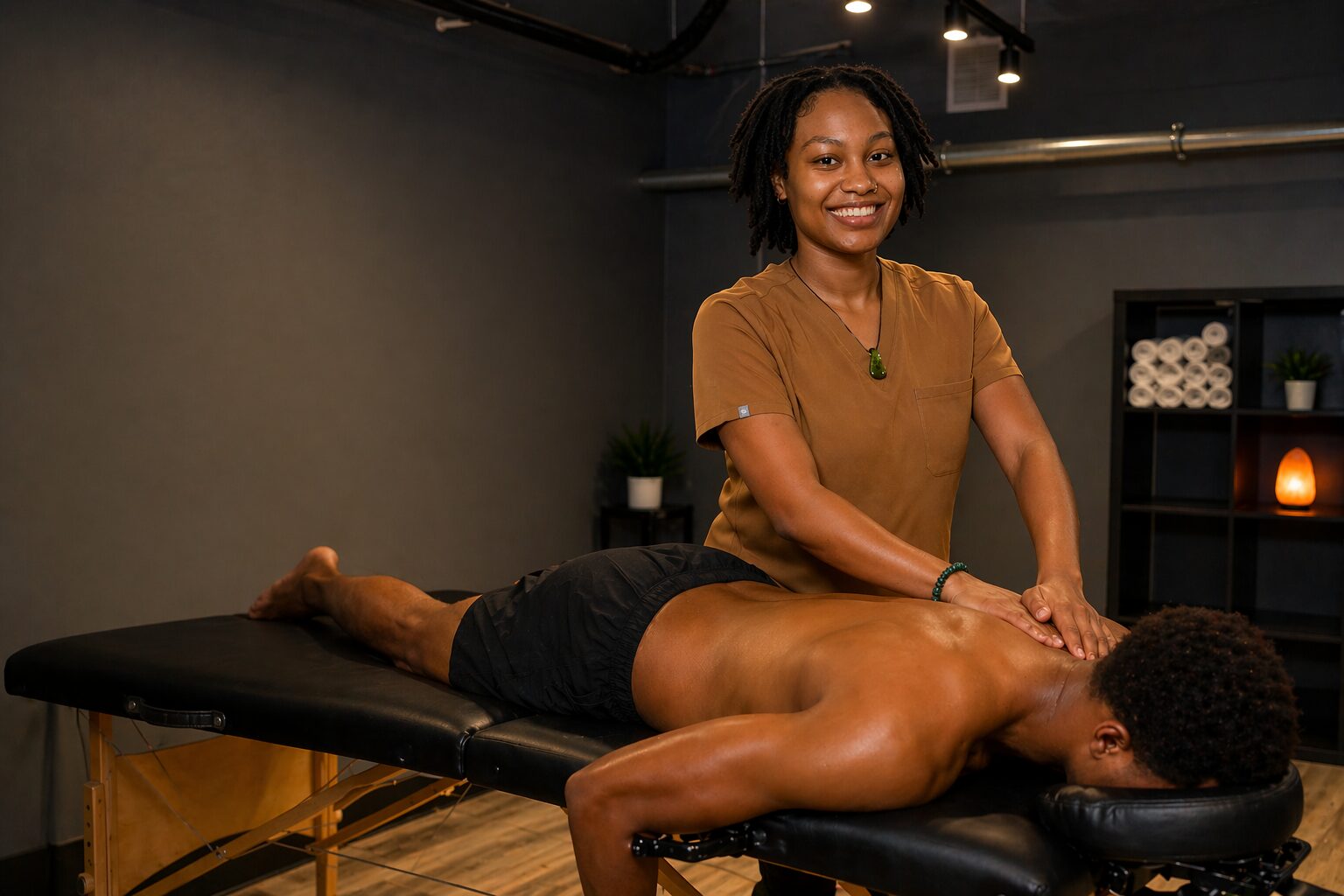
Massage Therapy for Athletes: How Regular Bodywork Supercharges Your Fitness Recovery
Recovery Is Where the Real Gains Are Made — And Massage Accelerates All of It
Every serious athlete and fitness enthusiast eventually learns the same hard lesson: your body can only produce results as fast as it can recover. Training breaks tissue down. Recovery builds it back up stronger. And anything that accelerates the recovery process — that shortens the window between stimulus and adaptation — directly amplifies the results of your training.
Massage therapy is one of the most evidence-backed recovery tools available, and yet it remains dramatically underutilized by everyday fitness enthusiasts who associate it with spas and luxury rather than athletic performance. The reality is that professional athletes across every sport — from NFL linemen to Olympic sprinters to elite CrossFit competitors — use regular massage therapy as a core pillar of their training programs. Not for relaxation. For results.
At Fit Elevation HTX, our licensed massage therapists work specifically with active individuals and athletes — people who train hard and need their bodies to perform consistently at a high level. Here’s what the science says about massage therapy, and why incorporating regular bodywork into your routine may be one of the smartest training decisions you make this August.
What Massage Therapy Actually Does to Your Body
The benefits of massage therapy for athletic recovery operate through several distinct mechanisms, all working simultaneously to restore and optimize physical function.
Increased blood flow and circulation: Massage mechanically stimulates blood flow to the treated areas, delivering oxygen and nutrients to recovering muscle tissue while simultaneously flushing out metabolic waste products like lactic acid that accumulate during intense exercise. This accelerates the natural recovery process and reduces the duration of post-exercise muscle soreness.
Reduction of muscle tension and adhesions: Intense training creates micro-tears in muscle fibers that, as they heal, can form adhesions — areas of scar-like tissue that restrict movement and create chronic tightness. Skilled massage therapy breaks down these adhesions, restoring tissue quality and improving range of motion in ways that stretching alone cannot achieve.
Nervous system downregulation: Hard training keeps your sympathetic nervous system — your fight-or-flight system — activated. Massage therapy activates the parasympathetic nervous system, promoting the rest-and-digest state that is essential for recovery, hormone regulation, and sleep quality. Post-massage, most clients experience measurably lower heart rate, reduced cortisol levels, and a profound sense of physical calm.
Injury prevention through early detection: A skilled massage therapist working regularly with an athlete learns that athlete’s body deeply over time. They can often identify areas of problematic tension, asymmetry, or developing strain before those issues become full-blown injuries — giving you the chance to address them proactively rather than reactively.
The Research Is Clear: Massage Therapy Works
This is not wellness folklore. The performance and recovery benefits of massage therapy are well-documented in peer-reviewed research. Studies published in journals including the Journal of Athletic Training and the Journal of Strength and Conditioning Research have found that massage therapy significantly reduces delayed onset muscle soreness (DOMS), improves perceived recovery, and enhances subsequent exercise performance.
A comprehensive meta-analysis reviewing dozens of studies on massage and athletic recovery concluded that massage was one of the most effective recovery modalities available — more effective than ice baths, compression garments, and active recovery in several key metrics including DOMS reduction and subjective recovery perception.
Critically, these benefits compound over time. Clients who receive regular massage therapy — not just occasional sessions after their hardest workouts — demonstrate better tissue quality, greater flexibility, reduced injury rates, and more consistent training output than those who rely solely on passive rest for recovery. Think of massage not as a one-time treatment but as an ongoing investment in your body’s performance capacity.
Massage Therapy at Fit Elevation HTX: What Makes Our Approach Different
Most massage experiences are built around relaxation. Fit Elevation’s massage therapy services are built around performance and recovery. Our therapists understand the demands of strength training, HIIT, bootcamp classes, and athletic conditioning — because they work alongside our fitness coaches in the same facility, with many of the same clients.
This integration matters. A massage therapist who knows you just did a heavy lower body session with Joe Gibson is going to approach your session differently than a generalist who sees you as a body on a table. The treatment is informed by your actual training, your actual weaknesses, and your actual goals.
We offer a range of massage modalities tailored to active clients, including deep tissue massage for chronic muscle tension and adhesion work, sports massage for pre- and post-event recovery, and targeted trigger point therapy for specific areas of dysfunction. Sessions are available in 60 and 90-minute formats, and our therapists work with each client to determine the frequency and focus that will produce the most benefit for their training program.
For members who are training hard multiple days per week, we typically recommend at minimum a bi-weekly session during periods of high training volume — and a weekly session during the most intense training blocks. For those new to massage therapy, a single session is often enough to demonstrate its value in a way that words alone cannot.
Making Massage Therapy Part of Your August Training Plan
The optimal time to book a massage is 24-48 hours after your most demanding training session of the week — enough time for the acute inflammatory phase to pass, but soon enough to intervene before soreness becomes entrenched muscle tension. If you’re training four days per week, one session per week timed to your midpoint or end of training week will produce the most consistent recovery benefit.
Hydrate well before and after your massage session. The mechanical manipulation of muscle tissue releases stored metabolic byproducts into circulation, and adequate water intake helps your body clear these efficiently. Many clients also find that incorporating light movement — a walk or gentle stretching — in the hours following a massage amplifies the circulation benefits of the session.
This August, we invite you to experience firsthand what regular massage therapy does for your training. Whether you’re chasing a strength personal record, working to improve your endurance, or simply trying to feel better in your body as you navigate a demanding fitness schedule, the bodywork services at Fit Elevation HTX are here to support every aspect of your journey.
Visit us at 2002 Oakdale St in Houston, explore our service menu at fitelevationhtx.com, and book your first session with our massage therapy team. Your recovery is part of your training — and it deserves the same attention, intention, and expertise as everything you do on the gym floor.